Guides ·
Cost to Build a Custom Home in Miami in 2026: What Actually Sets the Number
If you're pricing a custom home in Miami in 2026, you've already noticed the problem: everyone quotes a per-square-foot number, and no two numbers match. That's not because half of them are lying. It's because a per-square-foot figure for a custom home is a guess dressed up as a price. The honest answer to "what does it cost to build a custom home in Miami in 2026" is that the number is set by roughly a dozen decisions — your lot, your structure, your glass, your finish level — and until those decisions exist on paper, nobody can price your house. They can only price a house.
We're Metro Design-Build. Three generations of this family have built in Miami — Joseph Alter invented the Murphy bed, Herman Alter ran his shop in South Beach, and David Eyal Alter earned his Florida GC license at 19 and holds a broker's license as well. We build with 30+ in-house professionals, including our own millwork shop, and we're a licensed and insured Florida general contractor. Here's how the cost of a custom home actually gets set, and how to keep control of it.
Why can't anyone give me a straight per-square-foot price?
Because the two biggest cost drivers in a Miami custom home don't scale with square footage at all.
The first is the lot. A dry infill lot in Coral Gables and a waterfront lot in Miami Beach can carry identical houses and wildly different budgets. Soil conditions decide whether you're on a conventional foundation or pilings. Flood zone designation decides your finished floor elevation, which can mean fill, stem walls, or an elevated structure. Seawalls, docks, and drainage each carry their own permits and their own trades. None of that shows up in a per-square-foot number, and all of it is spent before the house is visible.
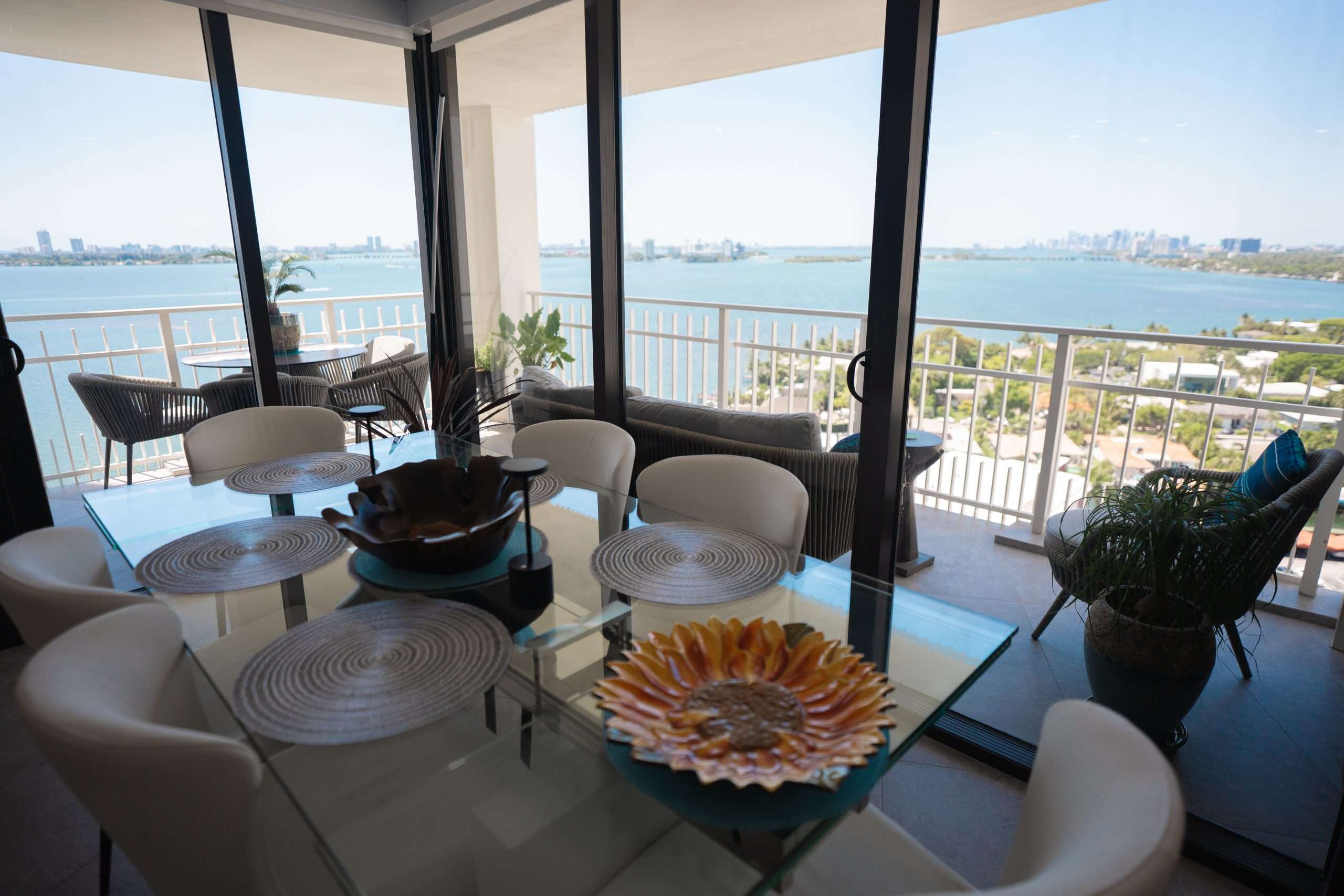
The second is openings. Miami-Dade sits in the high-velocity hurricane zone, and every window and door must be an impact-rated, Miami-Dade NOA-approved product. Modern custom homes want big glass — floor-to-ceiling sliders, corner windows, tall entries — and impact glazing is priced per opening, with the structural headers and columns to carry those spans priced right behind it. Two 6,000-square-foot houses, one with conventional windows and one with walls of glass, are not in the same budget conversation. This is why any serious luxury home builder in Miami prices from an opening schedule, not a floor area.
What are the real cost drivers in 2026?
In rough order of how hard they move the number:
- Site and foundation. Soil, elevation, flood zone, demolition of an existing structure, and utility connections. The least visible money in the project and the least negotiable.
- Structure. Concrete and steel sized for high-velocity hurricane zone loads. The engineering is not optional and the inspections are real.
- The glazing package. Every opening, impact-rated and NOA-approved, plus the structure to hold it.
- Roof system. Material, geometry, and attachment details — all inspected, all code-driven.
- Mechanical, electrical, plumbing. In 2026 this includes decisions buyers didn't face a decade ago: whole-home generators, EV charging, integrated smart systems, and the panel capacity to run all of it. Sized at design time, these are line items; discovered at rough-in, they're change orders.
- Interior finish level. The widest variable of all. "Custom" spans an enormous range, and millwork — kitchens, closets, wall paneling, built-ins — is usually the single biggest finish line item. Because we fabricate in our own shop with our own expert carpentry crew, that number is ours to control rather than a subcontractor's to mark up.
- Design and permitting. Architecture, engineering, and the months of municipal review. In some jurisdictions, aesthetic board review of the design itself.
A proposal that prices these seven categories line by line is a bid. A proposal that gives you a per-square-foot figure and a handshake is an invitation to fund someone's learning curve.
Where do custom home budgets actually blow up?
Almost never on the visible stuff. Budgets fail in three predictable places.
Allowances. A low bid with thin allowances — for glazing, finishes, cabinetry, appliances — isn't a lower price; it's a deferred one. When the allowance meets your actual taste, the difference arrives as change orders, priced without competition, mid-project, when you have no leverage. Compare bids by making every builder price the same specified house, down to the door hardware.
Permitting time. In Miami, plan review and inspections take as long as they take, and every month of delay carries financing cost, rental cost, and price drift. A builder who navigates municipal review weekly loses fewer of those months than one who visits it occasionally. Ask any bidder how many projects they currently have in permitting and where.
The design-to-construction handoff. When an architect designs in isolation and a contractor prices the finished drawings, the first real cost check happens after the design is done — which is when you learn the house you fell in love with is 30 percent over budget, paid for the drawings, and get to start over. This is the strongest practical argument for design-build: when the people pricing the house are in the room while it's being designed, cost is engineered in from the first sketch, not discovered at bid. Our process runs feasibility, design, permitting, and construction as one continuous chain for exactly this reason.
How should I vet the builder before I trust the number?
The number is only as good as the company standing behind it, so vet in this order:
- License and insurance first. Verify the Florida GC license number and current insurance certificates before comparing a single dollar. It's the fastest filter in new home construction in Miami and it eliminates more bidders than price does.
- Self-performed work. Ask what the builder does with its own people versus brokers out. A firm with in-house trades and its own millwork shop controls schedule and quality on the items that slip most. A firm that subs everything is a scheduling service with a markup.
- Comparable work, walkable. Ask to see finished projects at your finish level. Our portfolio runs from ground-up homes like the Stern Residence to the Joy Fishman Residence, where we combined two condos into one 3,000-square-foot home — a different building type, same standard of execution.
- Land intelligence. Because our principal is also a licensed broker, we run buildability and budget feasibility on lots before clients close on them. If the custom home is the reason you're buying the land, the cost conversation should start before the purchase, not after.
The same diligence applies whether you're comparing a boutique firm against an ultra-luxury builder in Miami or deciding between building new and doing a gut renovation of an existing house. The builders who welcome the questions are the short list.
How much does it cost to build a custom home in Miami in 2026?
There is no honest single number. The lot, foundation type, flood elevation, glazing package, and finish level each move the total more than square footage does. What you can get in 2026 is a reliable number for your house: a line-item budget built during design, from your site and your specifications. Any figure quoted before those exist is a marketing number.
Is it cheaper to build or buy in Miami in 2026?
It depends on the submarket and what you're comparing. Buying is faster; building gets you the house you actually want, engineered to current hurricane code, with no inherited compromises. Because our principal holds both a GC license and a broker's license, we can run that comparison on real properties rather than in the abstract — including whether a specific lot supports what you want to build.
How long does it take to build a custom home in Miami?
Longer than the construction schedule alone suggests, because design and permitting come first and municipal review time varies by jurisdiction. Plan in phases — feasibility, design, permitting, construction — and ask every builder for their current permitting timelines in your specific municipality, not a generic estimate.
Ready for a real number instead of a per-square-foot guess? Talk to us or call 305-300-7996.
Metro Design-Build Editorial Team
Written by the builders and designers of Metro Design-Build — a three-generation, licensed & insured Florida GC. Meet the team →